Power trades
An adaptive model that tracks abnormal volume spikes.
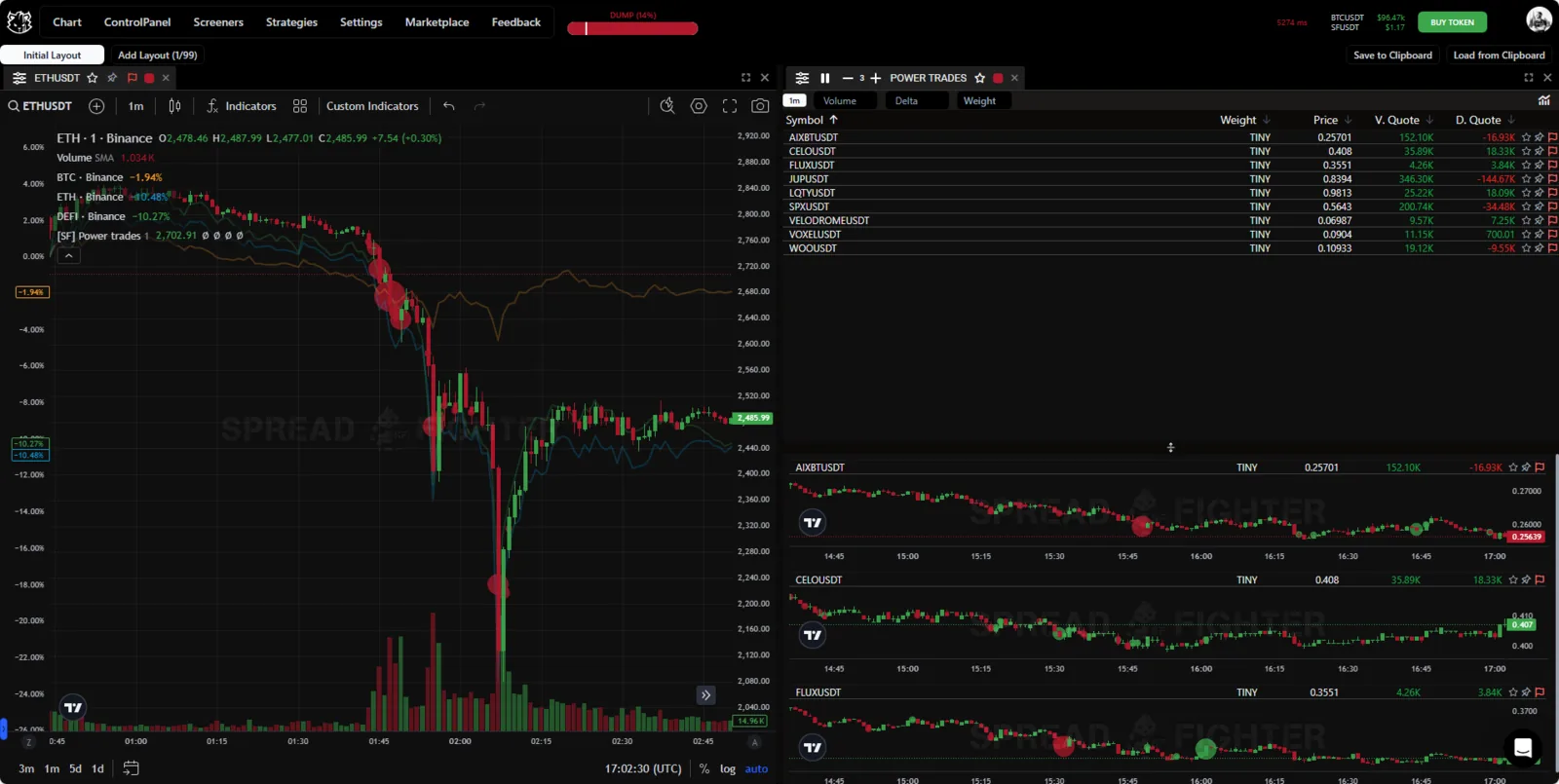
Widget appearance.
Model Description
The advanced adaptive Power trades model evaluates the volumes passing through the market in real time. Using the Gaussian distribution and the Z-score, it classifies them by significance. Volumes fall into the following categories:
| Category | Probability of occurrence | Significance |
|---|---|---|
| Tiny | 31.7% | Minimal |
| Small | 4.5% | Insignificant |
| Normal | 0.3% | Medium |
| Large | ~0.01% | High |
| Huge | ~0.001% | Maximum |
Volumes in the tiny & small categories can signal the start of activity, and volumes in the large & huge categories can signal the climax of trading activity.
The model uses the standard deviation method. This lets it adapt to the specific behavior of individual assets and to changing market conditions.
Model Tests
Coming soon…
Location
To add the "Power trades" tool to your workspace, first click the "Screeners" button in the platform header. Then click the button of the same name in the "Microstructure" section.
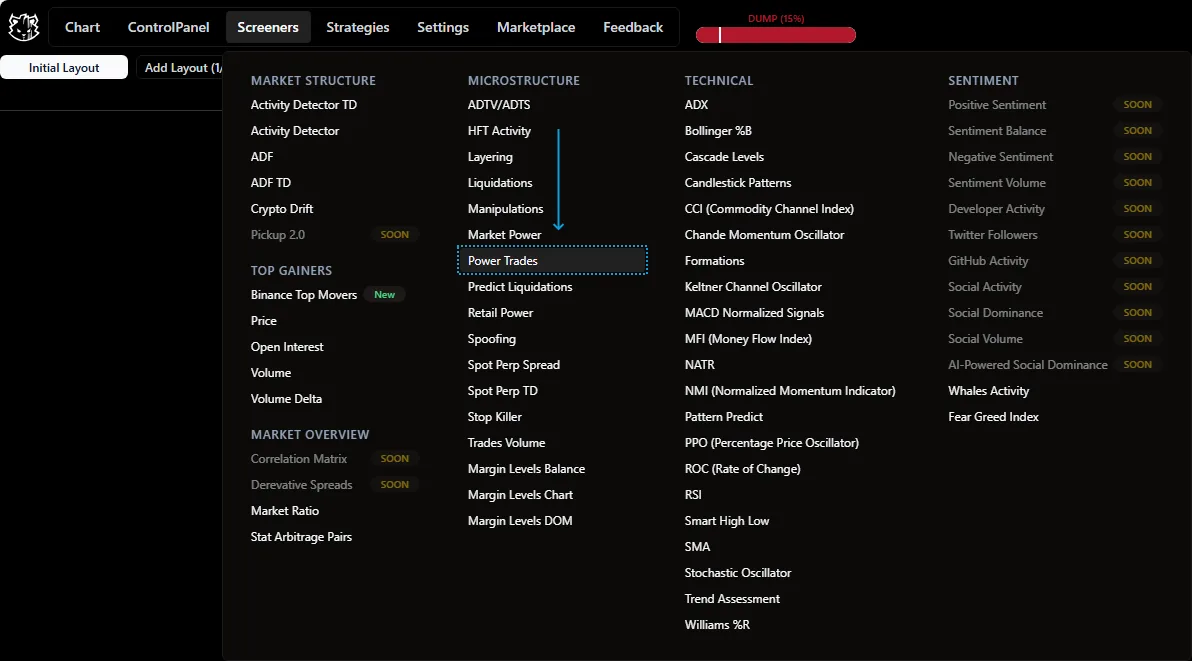
Functionality
Indicator
Power trades shows abnormal volume spikes that stand out from the general market conditions.
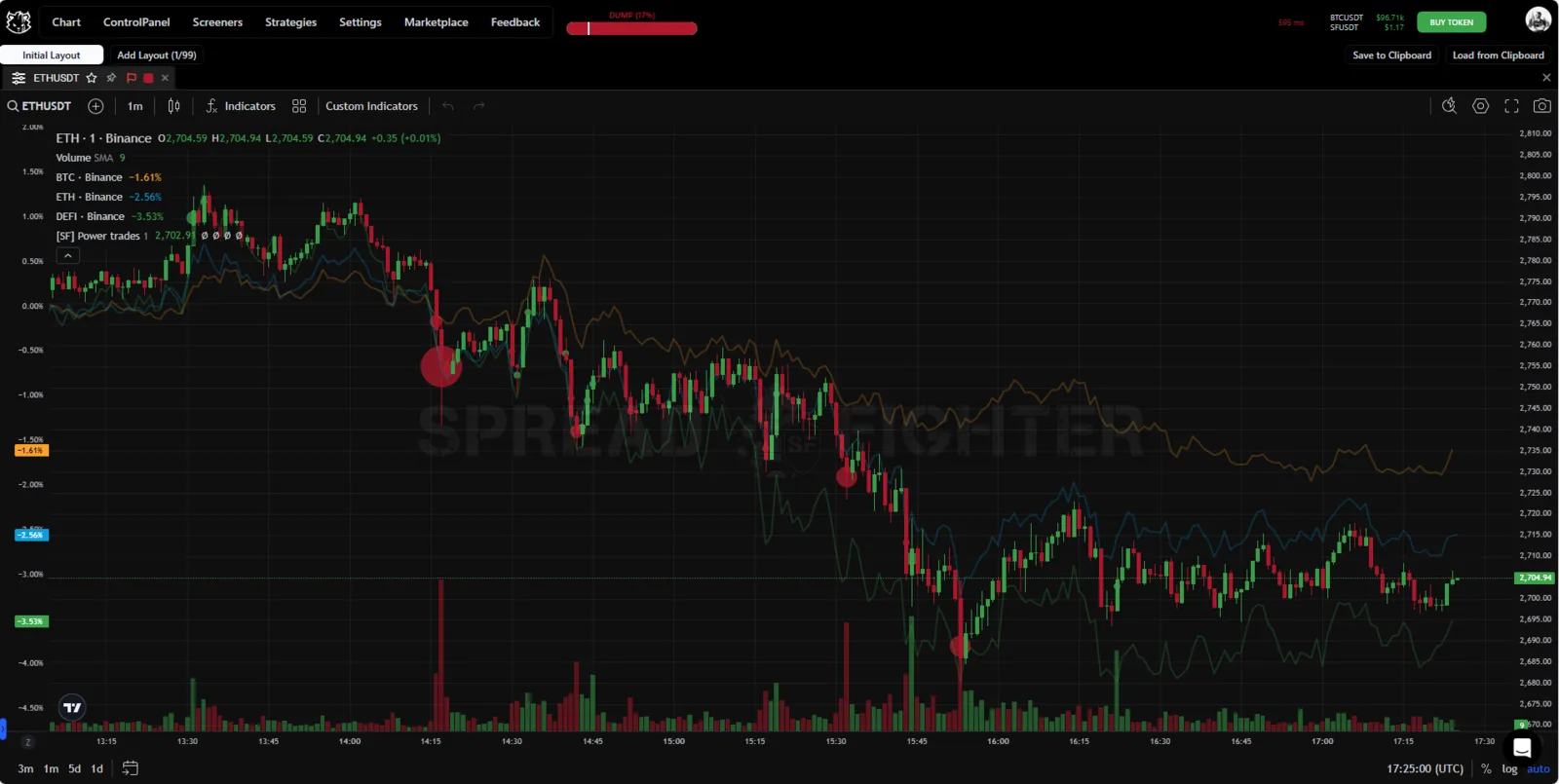
Power trades indicator.
Widget
Power trades is a scanner that shows abnormal volumes passing through the market in real time. The user gets the information as a table.
The widget table receives the following data:
- Weight - the weight of the signal,
- Price - the average price of the volume spike,
- V. Quote - the trading volume at the moment the signal arrived,
- D. Quote - the taker-side volume delta at the moment the signal arrived.
Incoming signals can be filtered by weight, volume or volume delta.
The following weight types are available:
- TINY - the least significant possible volume spike;
- SMALL - a minor volume spike;
- NORMAL - a volume spike of medium significance;
- LARGE - a volume spike of "high significance";
- HUGE - the most significant possible volume spike.
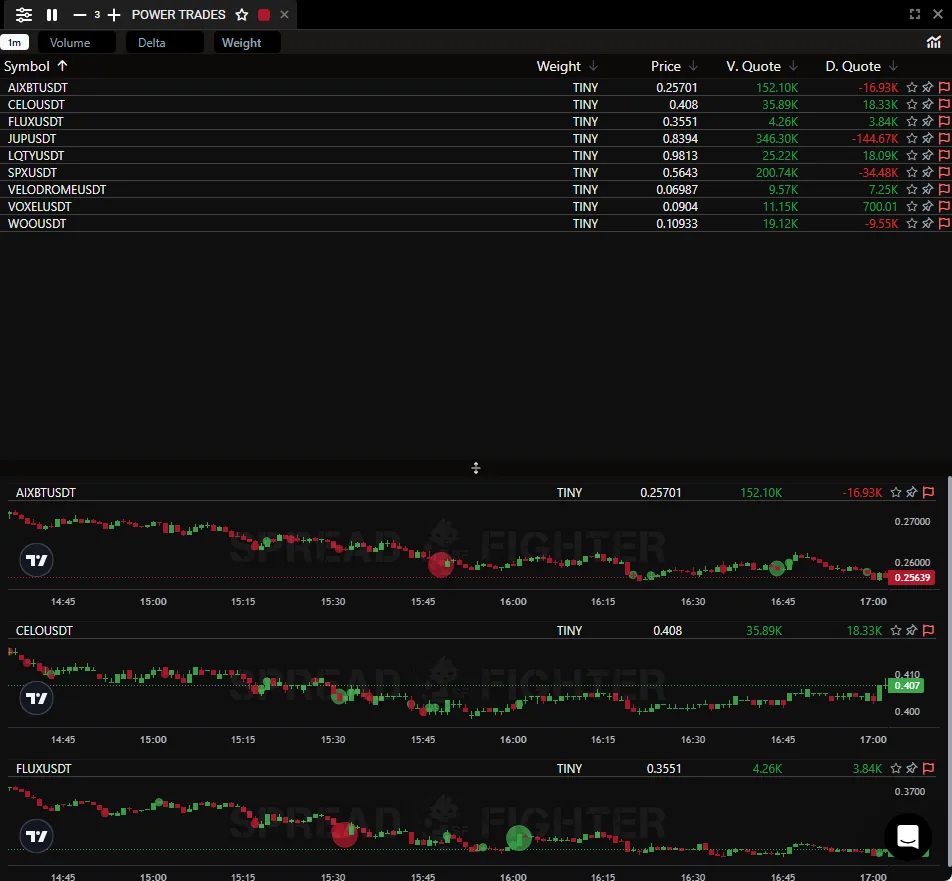
Power trades widget.
Use Cases
The tool can be used for:
- finding reversal points and opening and closing positions more precisely at large & huge points;
- confirming breakout entries for momentum strategies at tiny & small points;
- finding assets "in play" as fast as possible for manual trades.