SF - Market value to realized value
The ratio of an asset's market capitalization to its realized capitalization
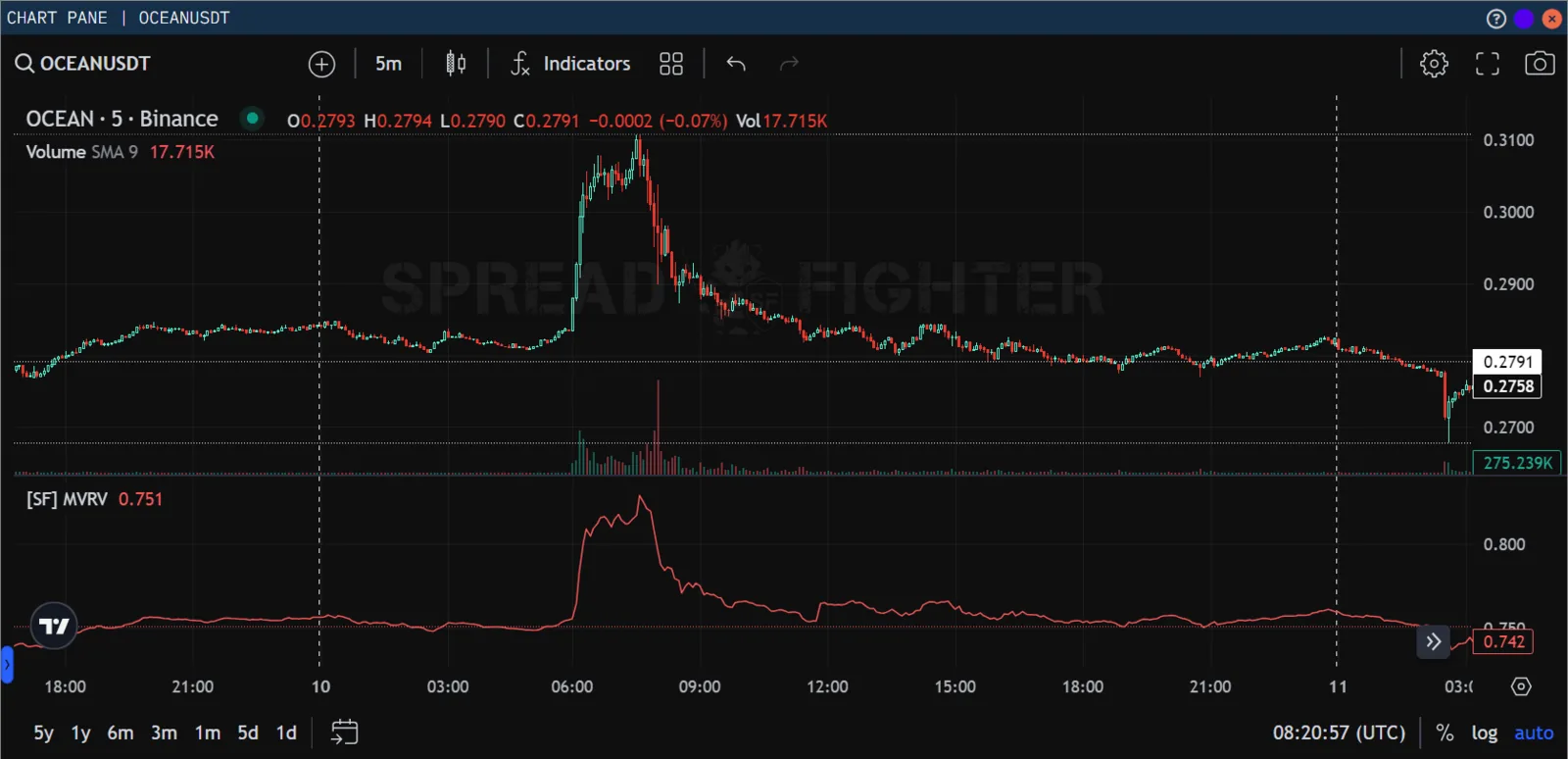
Indicator appearance
Description
Market value to realized value is a sentiment analysis indicator that shows the ratio of an asset's market capitalization to its realized capitalization.
Realized capitalization is the cost basis of the supply.
Higher MVRV values point to a larger amount of unrealized profit in the system and raise the probability that investors will distribute coins to lock in profit. Lower values mean a smaller share of unrealized profit. This can signal either an undervalued price or weak demand dynamics.
Features
In the chart settings window, the user can choose the display colors and the transparency of the indicator.
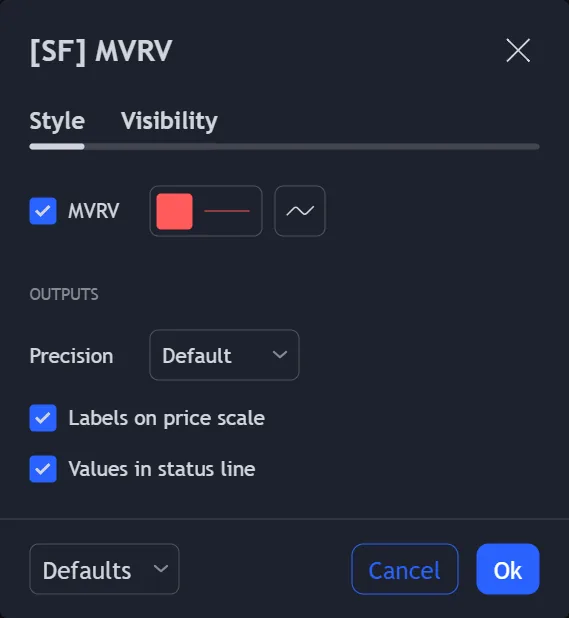
Indicator chart settings
Access by plan
The indicator is available on all subscription plans
Use cases
The MVRV indicator and its derivatives are used to identify long-term trends and to spot accumulation and distribution cycles. A drop of the ratio below 1 suggests that active speculators dominate over long-term investors.
In the model developers' view, a ratio that stays below 1 for several months indicates an accumulation cycle.
In the original version of MVRV, a level above 3.7 is marked as the value that indicates a distribution cycle. In the MVRV Free Float and MVRV Z-Score modifications, the distribution cycle levels are above 3.2 and 7, respectively.
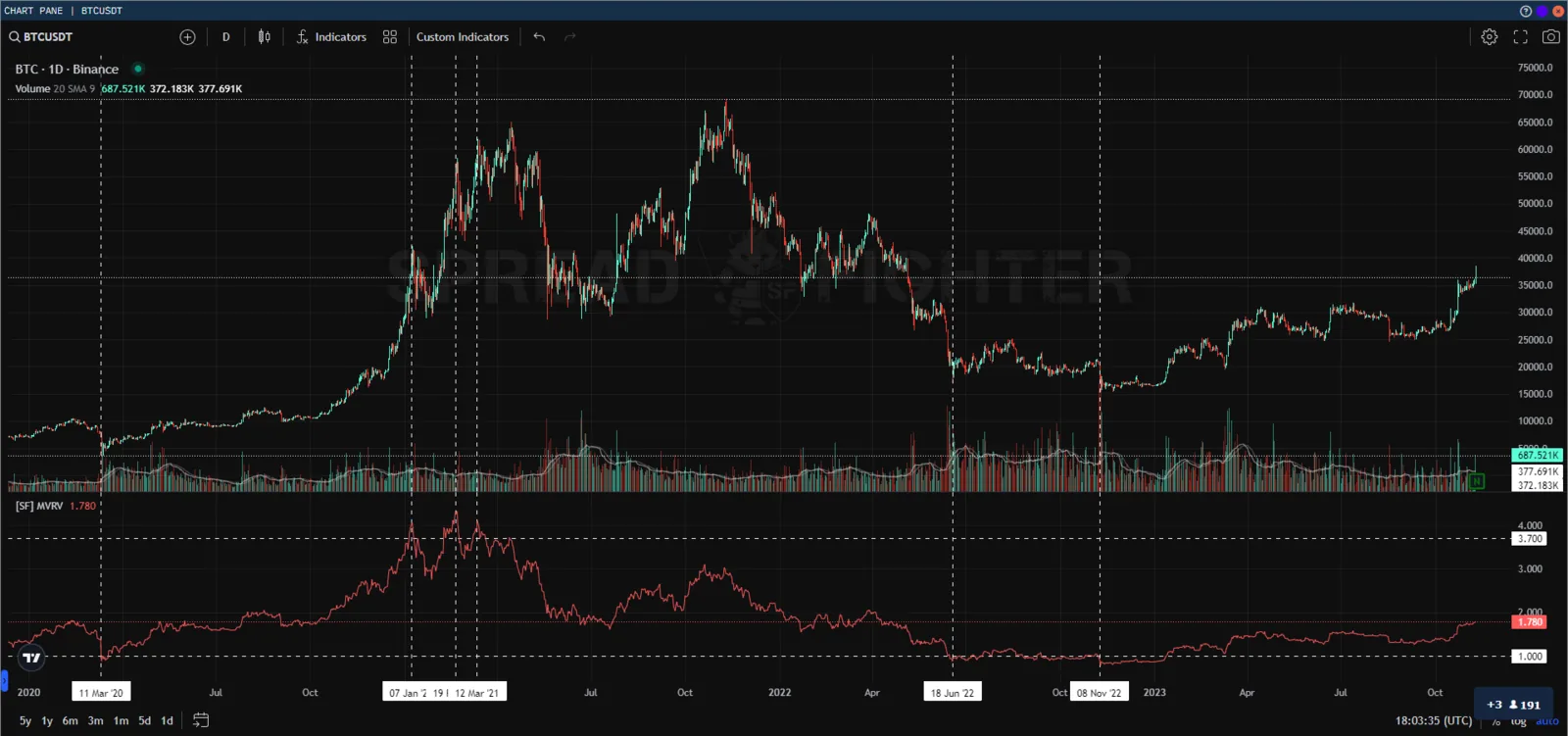
MVRV statistics
The MVRV concept assumes that a falling ratio and a growing number of idle coins are backed by investors' long-term belief in Bitcoin technology and in price growth. A rise of the metric to speculative levels (3.2-7) and a decline in the number of idle coins are seen as a way to increase the asset's recognition and widen its user base.
MVRV is one of the most popular indicators in the crypto market. It is used not only by individual researchers but also by professional analytics companies.
Source: forklog